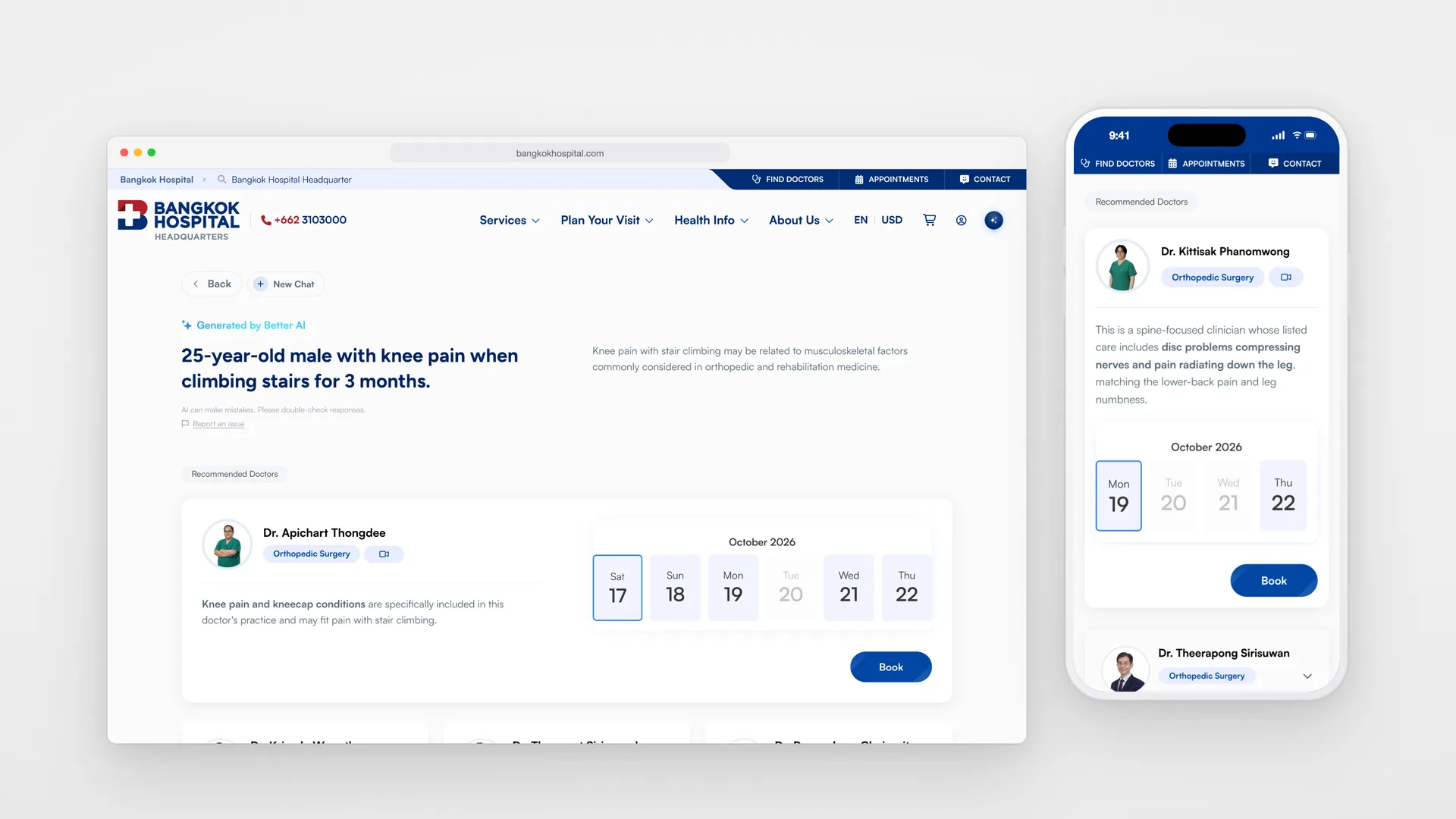
AI Doctor Recommender results on desktop beside a phone: recommended orthopaedic surgeons, the reason each fits and open dates with Book

An AI assistant that takes a patient from a symptom to the right specialist

The brief:

  • A patient who knows how they feel rarely knows which department to search. Bangkok Hospital wanted its website to start from the symptom, not from the directory.

  • We designed and built the AI Doctor Recommender: one assistant, across the hospital network’s websites, that listens to the symptom and then leads to the right doctor, centre or health-check package.
How it works:

  • The visitor describes how they feel in their own words, with their age and gender, in any of the site’s eleven languages.

  • It asks a few short follow-up questions, one at a time, then confirms age and gender before it recommends anyone.

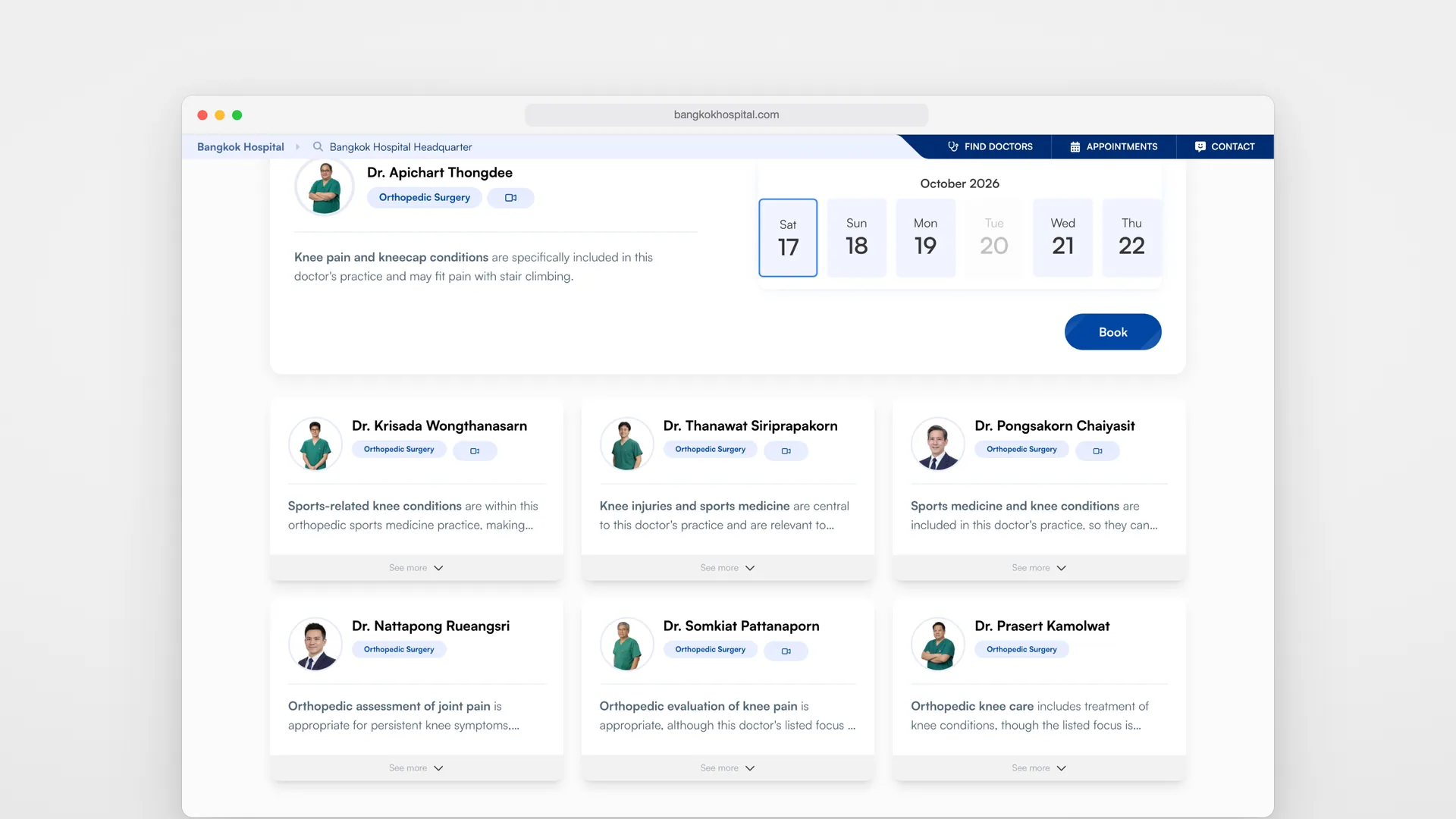
  • The results page sums up what the visitor described in plain language and recommends doctors from the hospital’s directory, each with the reason they fit, their next open dates and a Book button.

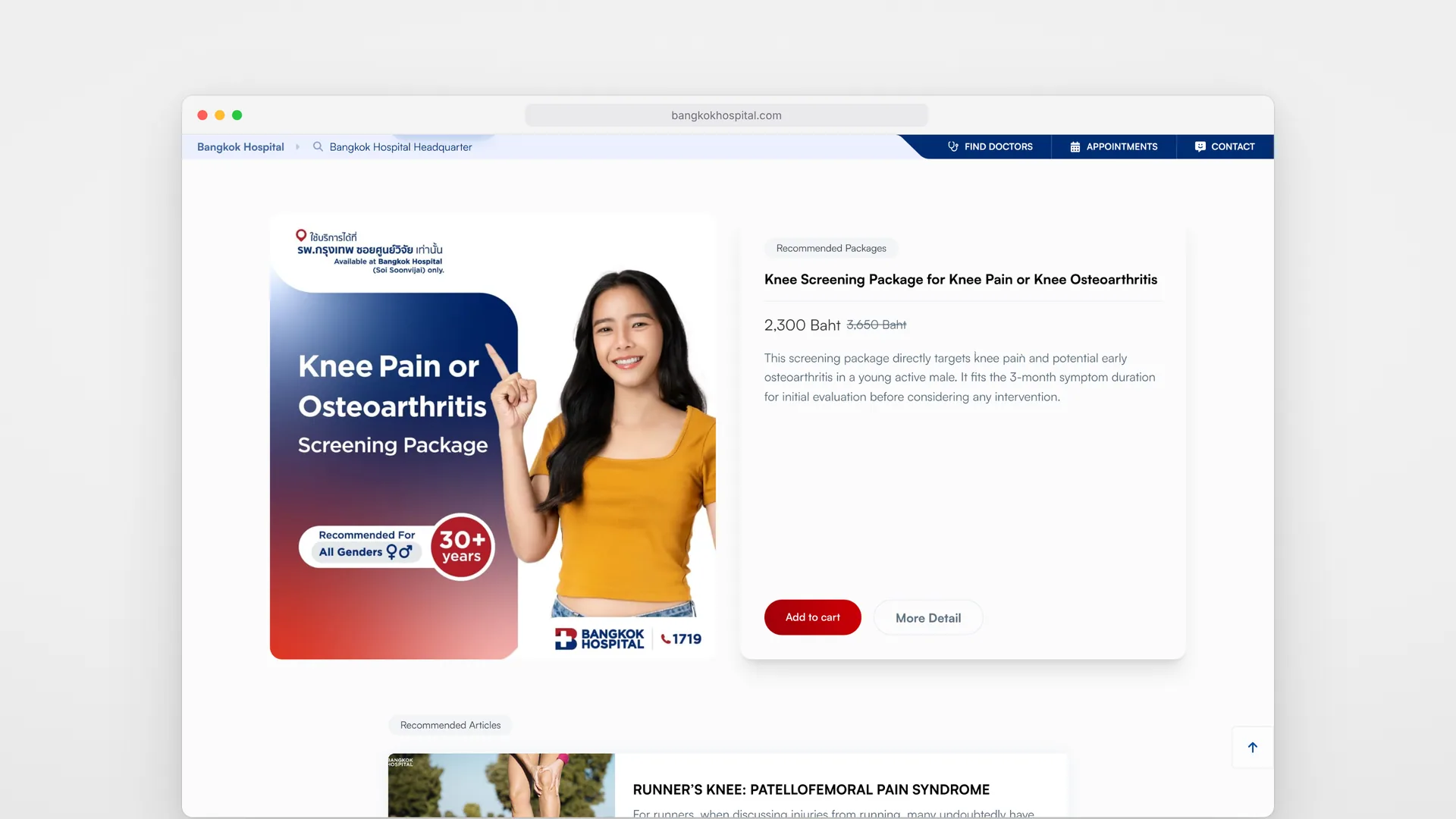
  • Below them: the related centres, a matching health-check package with its price, ready to add to the cart, articles from the hospital’s own site and simple health tips.

  • It opens from the header on every page, and from the search bars on Find a Doctor, Packages and Diseases & Treatments.

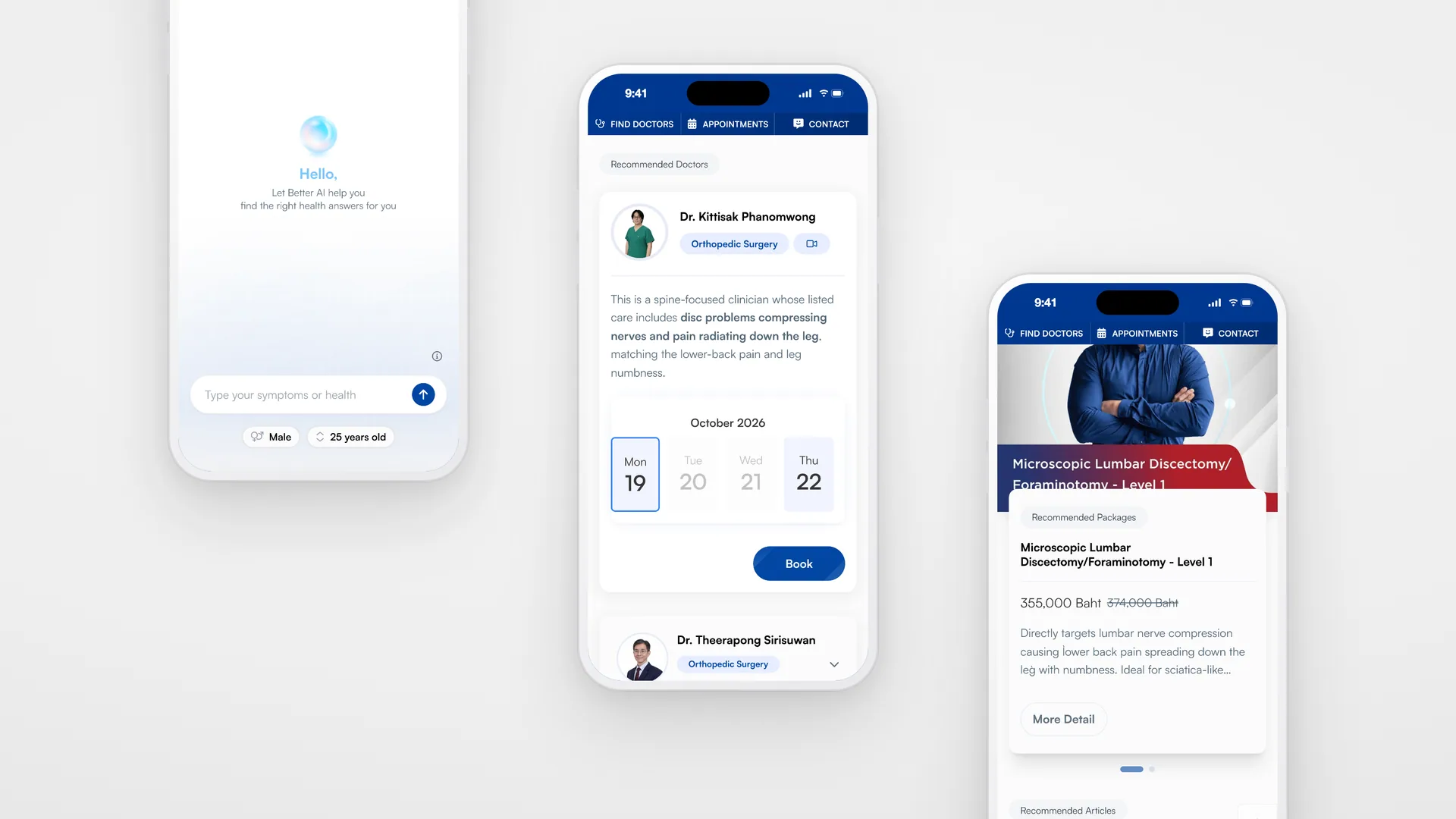
The AI Doctor Recommender on three phones: the welcome screen, an orthopaedic surgeon with open dates and Book, and a recommended package with its price
From a symptom to a doctor, a date and a package
AI Doctor Recommender results on desktop: an orthopaedic surgeon with open dates and Book, three more surgeons below, and the Hip and Knee Center
Recommended doctors, each with the reason they fit

The result:

  • Appointments booked through the AI Doctor Recommender rose by several hundred percent compared with the hospital’s previous AI doctor finder.

The AI harness:

  • The AI Doctor Recommender runs inside a harness we built to control the AI: the model holds the conversation, and the hospital’s own systems decide what it may say and show.

  • Its own data. Every doctor, centre and package on the results page is drawn from the hospital’s directory by the website, never written by the AI, and articles come only from the hospital’s own pages.

  • Any model, task by task. Each step — sorting the symptom, routing the question, holding the conversation — runs on the model chosen for that job. Moving one to a newer model is a change of setting, not a rebuild.

  • Checked every month. A fixed set of test questions is run against it, and what it says about each doctor is compared with that doctor’s live profile.

Safe by design:

  • An emergency symptom ends the conversation with the emergency numbers, every time.

  • Contact numbers and links come only from a list the hospital has approved.

  • Before the results, visitors are told plainly that this is a recommendation, not a diagnosis, and it asks only for symptoms, age and gender.

  • People stay in the loop: the hospital’s care team and advising doctors review real cases, and every change to how it recommends is approved by a person.

AI Doctor Recommender results on a phone: a plain-language summary of lower back pain down the left leg, and the first recommended surgeon
AI Doctor Recommender results on desktop: a knee pain screening package with its price and Add to cart, and a recommended hospital article
Let’s chat
COPYRIGHT © 2026 5LAB COMPANY
CRAFTED WITHANDIN BANGKOK